

High blood pressure (hypertension) means blood pushes too hard against your artery walls, usually a reading of 130/80 mm Hg or higher. Low blood pressure (hypotension) means the pressure is lower than normal, generally below 90/60 mm Hg. High blood pressure rarely causes symptoms but raises your risk of heart attack and stroke, while low blood pressure is often harmless unless it causes dizziness, fainting or other symptoms.
If you happen to have a blood pressure status that puts you at risk for some gruesome health conditions, we’ll show you how to forge your way back to normal blood pressure levels. Let’s start this journey of self-health discovery by discussing the differences between low vs high blood pressure.
How To Tell the Difference Between High and Low Blood Pressure
There’s no shame in admitting you don’t know what blood pressure is. So for those of us who didn’t study cardiology, blood pressure is the force that blood applies to the walls of your arteries as it rushes through your body. And what are arteries again? They are the blood vessels that transport oxygenated blood from your heart to the rest of your cells.
When you have high blood pressure, otherwise known as hypertension, this force is excessively high. Hypertension can lead to some brutal health issues. Alternatively, low blood pressure occurs when the force of your blood is too low. Low blood pressure doesn’t cause many health issues but can have some pesky side effects that we’ll discuss later on.
So how can you determine whether you have low, high, or normal blood pressure? By examining your systolic and diastolic numbers.
Deciphering Systolic and Diastolic Numbers
When you get a blood pressure test, two numbers will show up. The systolic number is the higher one. It correlates with the pressure that’s applied to your arteries when your heart beats. The diastolic number is the lower value. It measures the pressure that’s applied to your arteries when your heart is resting between beats. Low blood pressures have a systolic number that’s 90 or below whereas blood pressure is considered elevated at 120 to 129 and high at 130 or above. Lower blood pressure on the diastolic scale would be 60 or less and high blood pressure starts at 80 or above.
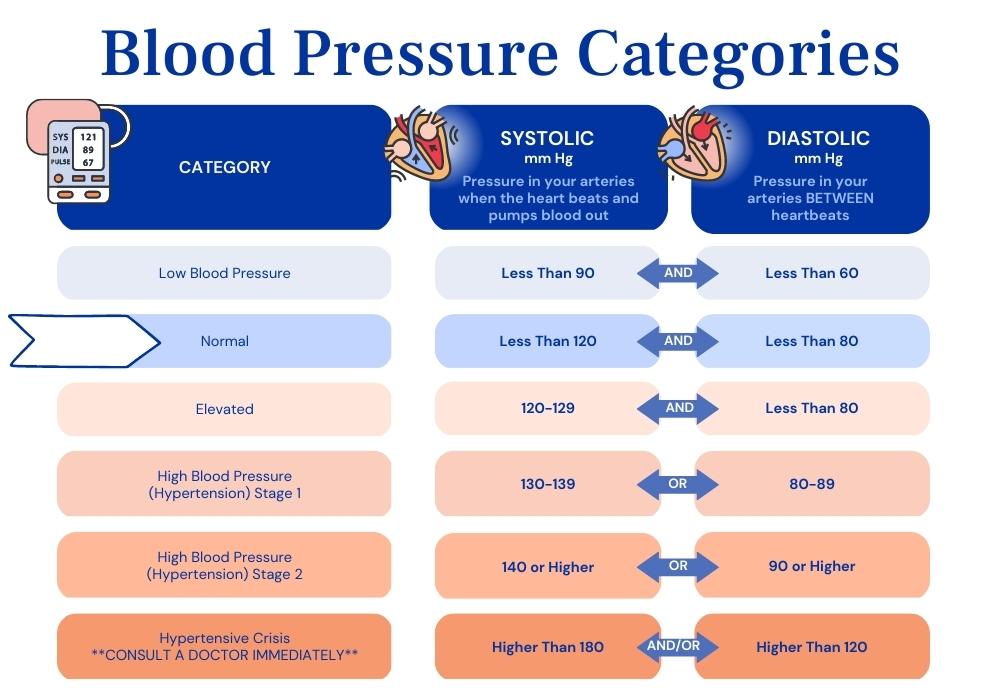
Is this number system a little tedious? Perhaps. But since your heart is literally the most important organ in your body, making sure that it’s beating at a normal pace can be truly life-saving. Especially if you have abnormally high blood pressure. As you can see in the chart below, there are different ranges of numbers within the high blood pressure category. As the numbers get higher, so does your risk of having major health issues. So if you have a systolic number over 180 and a diastolic number over 120, get your doctor on the phone stat!
Blood Pressure Categories
Here is how blood pressure readings are grouped. The high blood pressure categories come from the American Heart Association and American College of Cardiology, which reconfirmed them in their 2025 guideline:
- Low (hypotension): generally below 90/60 mm Hg
- Normal: below 120/80 mm Hg
- Elevated: 120 to 129 systolic and below 80 diastolic
- Stage 1 high blood pressure: 130 to 139 systolic or 80 to 89 diastolic
- Stage 2 high blood pressure: 140 or higher systolic or 90 or higher diastolic
- Severe (hypertensive crisis): higher than 180 systolic and/or higher than 120 diastolic
If your two numbers fall in different categories, the higher category applies. A reading above 180/120 needs prompt medical attention, and if it comes with chest pain, shortness of breath, back pain, numbness, weakness, vision changes or trouble speaking, call 911.
Where To Get a Blood Pressure Test
Clearly, knowing your blood pressure status is of utmost importance. After all, it can help determine if you are at risk for some supremely unfun diseases. But first, you need to know how to get one:
- Doctor’s Office: One of the most reliable places to get your blood pressure tested is at your primary care clinic. It’s such a basic procedure your doctor could probably do it in their sleep—but don’t worry, they won’t. They’ll simply wrap a cuff around your arm, listen to your heartbeat with a stethoscope, and inflate and deflate the cuff to measure your blood pressure.
- Pharmacy: You’ve probably seen a blood pressure device at a drugstore before. It’s a chair with a cuff attached to it that shoppers can use to measure their blood pressure while they look for shampoo and bandaids. Though quick and convenient, don’t take its outcome as law. If your blood pressure results come as a major surprise to you, it’s best to get a second reading from your doctor.
- Home Blood Pressure Monitor: The most convenient option of all is home blood pressure tests. These allow you to monitor your blood pressure from the comfort of your humble abode. When using these, be sure to follow the instructions closely and get a second opinion if needed.
Low vs High Blood Pressure: Understanding the Causes
It’s time to focus on taking preventative steps in caring for your blood pressure health. This starts by knowing what your pressure type really means and what it can indicate about your health. Let’s begin by learning about the less menacing of the two: low blood pressure.
Living with Low Blood Pressure
Low blood pressure, or hypotension, can be caused by dehydration, blood loss, heart problems, endocrine disorders, alcohol use, or certain medications such as:
- Anti-anxiety medicines
- Antidepressants
- Diuretics
- Painkillers
Do you have low blood pressure and are currently taking any of these medications? Then consult with your doctor to see if you need to part ways with your prescription.
Though having lower blood pressure than the norm may seem like a downer, it’s not really a health risk in and of itself. The problem lies more in the symptoms it causes. This can include lightheadedness, blurry vision, fainting, shallow breathing, dizziness, lack of concentration, and confusion—probably not anything you want to deal with on a regular basis! If you are experiencing these symptoms fairly often, here are some things you can do to help increase your blood pressure:
- Increase Sodium Intake: Unlike many heart-related health issues, consuming more salt can actually be good for those with low blood pressure.
- Wear Compression Stockings: Low blood pressure can stem from circulation and blood flow issues. This can be solved by wearing compression stockings, which prevent blood from pooling in your legs and help raise blood pressure.
- Get Regular Exercise: Working out also helps with circulation and blood volume.
- Avoid Hot Water: Hot showers and baths lead to blood vessel dilation, which can cause blood pressure to drop. So opt for a cooler temperature while bathing.
Monitoring Your High Blood Pressure
Hypertension is frankly a bigger issue than low blood pressure. So if this is what your blood pressure test reads, it’s time to examine the cause. It could be any of the following:
- Age: The older you get, the more likely your blood pressure is to increase.
- Family history: If members of your family have had hypertension, you’re consequently more likely to develop it.
- Obesity: People who are overweight are much more likely to have high blood pressure. And as obesity tends to be linked to inactivity, those who don’t get enough exercise increase their chances of hypertension.
- Tobacco and Alcohol Consumption: Smoking and drinking are both contributors to increased blood pressure.
- Too much Salt: Unlike with low blood pressure, salt can be a bad thing for those with hypertension as excess amounts can increase your chances of developing it. Try flavoring your food with alternative seasonings or make up for the salt with extra pepper!
- Stress and Sleep Apnea: Are you a high-stress, low-sleep individual? Managing stress and getting quality sleep is important to avoid a blood pressure spike.
- Chronic Health Conditions: Kidney disease, high cholesterol, and diabetes are all conditions that can cause hypertension.
Based on what we mentioned above, it should be no surprise that quitting alcohol and tobacco, losing weight, getting more exercise, and cutting down on salt can help lower blood pressure. But diet plays a large part too. Here are some nutrients you should get better acquainted with:
- High-potassium foods like avocados, spinach, sweet potatoes, and bananas.
- Whole-wheat bread, brown rice, quinoa, and other whole grains.
- Lean proteins such as fish, legumes, and skinless chicken.
- Blood pressure-lowering drinks like green tea and hibiscus tea.
- Dark chocolate with at least 70% cocoa to substitute for milk chocolate.
There is plenty of other blood pressure-lowering diet changes you can make to improve your overall health. Unfortunately, this includes limiting the intake of sugary, caffeinated, fried, processed, and generally fatty foods and beverages. This doesn’t mean you’ll never have a donut or milkshake again. It’ll just be a more occasional, and thus a more appreciated treat.
Symptoms of Low vs. High Blood Pressure
High blood pressure rarely causes symptoms, even while it damages your arteries, heart and kidneys. That’s why it’s often called a silent condition, and why regular checks matter. Headaches, nosebleeds or shortness of breath usually show up only when blood pressure is severely high.
Low blood pressure is the opposite: you’re more likely to notice it. Dizziness, lightheadedness, blurred vision, fatigue, nausea and fainting are common, especially when you stand up quickly (orthostatic hypotension).
Is It Better to Have High or Low Blood Pressure?
Neither extreme is ideal, but for most adults, blood pressure that runs a little low without symptoms is far less concerning than high blood pressure. High blood pressure strains your arteries over time and raises your risk of heart attack, stroke, kidney disease and dementia. Low blood pressure becomes a concern when it causes dizziness or fainting, or when it drops suddenly, which can signal dehydration, bleeding, infection or a heart problem.
If your readings are consistently 130/80 or higher, our providers offer high blood pressure treatment that starts with lifestyle changes and adds medication when it’s needed.
Get Your Blood Pressure Checked
Don’t spend too much time worrying about your low or high blood pressure. After all, stress is one of the main causes. You should instead focus on doing all you can to bring your blood pressure to a normal level. This means monitoring your daily habits, adjusting your diet, and putting in more time at the gym—all things that will make you feel good anyway! Still don’t know what your blood pressure level is? Make time with your primary care doctor and find out ASAP to ensure a healthy life! We offer next-day appointments in Newark, Wilmington and Glasgow, and we accept most major insurance plans, including Medicare and Medicaid.
